


The story of casinos is not just about slot gacor games of chance—it is a reflection of social change, economic evolution, and cultural adaptation over time. From their early beginnings in Renaissance Europe to the dazzling entertainment hubs of today, casinos have transformed dramatically in both form and function. Over the past five centuries, they have evolved from exclusive aristocratic spaces into global entertainment ecosystems accessible to millions.
Understanding this transformation reveals how deeply casinos are intertwined with history, technology, and human behavior.
The Birth of the Casino in Renaissance Italy
The concept of the casino can be traced back to 17th-century Italy, particularly in the city of Venice. The word “casino” originally referred to a small house or social club where people gathered for leisure activities, including music, dancing, and games.
One of the earliest known gambling establishments, the Ridotto, was established in 1638. It was created by the government to regulate gambling during carnival season, providing a controlled environment for entertainment.
At this stage, gambling was closely associated with the upper class. Strict dress codes and entry requirements ensured that casinos remained exclusive spaces for the elite.
Expansion Across Europe
As the popularity of gambling grew, casinos began to spread throughout Europe in the 18th and 19th centuries. Cities such as Monte Carlo became synonymous with luxury and high-stakes gaming.
The establishment of the Casino de Monte-Carlo in the mid-19th century marked a turning point. Unlike earlier venues, it was designed not just as a gambling hall but as an architectural and cultural attraction.
During this period:
Casinos became symbols of wealth and sophistication Gambling was integrated into social life among the aristocracy Entertainment expanded beyond games to include performances and fine dining
This European model laid the foundation for the modern casino experience.
The American Shift: From Frontier to Regulation
Casinos took on a different identity when they reached the United States. In the 19th century, gambling was common in frontier towns along the Mississippi River and in the American West.
However, unlike Europe’s refined establishments, early American gambling venues were often informal and unregulated. Over time, concerns about crime and social impact led to widespread restrictions.
The turning point came in the early 20th century when gambling was legalized in certain areas, most notably in Las Vegas.
The Rise of Las Vegas
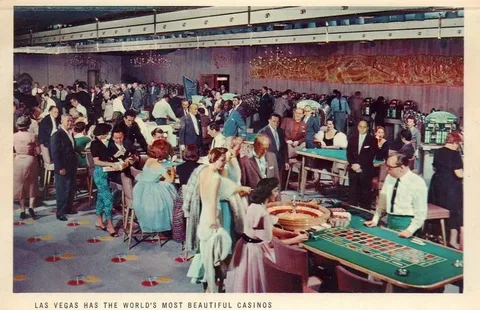
Las Vegas emerged as the global capital of casino entertainment in the mid-20th century. What began as a desert town quickly transformed into a vibrant hub of lights, luxury, and large-scale resorts.
Key developments included:
The construction of themed casino resorts Integration of entertainment such as shows, concerts, and fine dining Expansion of gaming options to attract diverse audiences
Las Vegas redefined the casino experience by combining gambling with entertainment, creating an all-in-one destination. It shifted the perception of casinos from exclusive venues to accessible entertainment centers.
The Influence of Technology
The late 20th and early 21st centuries introduced technological advancements that reshaped the casino industry. Electronic gaming machines, digital systems, and online platforms expanded the reach of casinos beyond physical locations.
Key innovations included:
Slot machines with advanced graphics and features Online casinos accessible from personal devices Secure payment systems enabling global participation
Technology not only increased accessibility but also changed how players interacted with games. The experience became more personalized, interactive, and data-driven.
The Globalization of Casino Culture
By the 2000s, casino culture had spread far beyond Europe and the United States. Regions such as Asia began to develop their own gaming hubs, blending local traditions with global influences.
Cities like Macau emerged as major players in the global casino industry. Often referred to as the “Las Vegas of Asia,” Macau introduced a new scale of gaming revenue and cultural integration.
This globalization led to:
Diverse game offerings tailored to regional preferences Increased competition among international casino destinations Cultural fusion in design, entertainment, and gameplay
Casinos became not just entertainment venues, but major economic drivers.
The Digital Revolution and Mobile Gaming
In recent years, the rise of mobile technology has further transformed casino culture. Players no longer need to visit physical locations to enjoy gaming experiences.
Modern trends include:
Mobile-optimized casino platforms Live dealer games that replicate real-world environments Virtual and augmented reality experiences
This shift has made casino gaming more accessible than ever, allowing players to engage from virtually anywhere.
Changing Perceptions and Social Responsibility
Over the centuries, public perception of casinos has evolved significantly. Once viewed as exclusive or even controversial spaces, casinos are now widely accepted as mainstream entertainment.
At the same time, there is a growing emphasis on responsible gaming. Modern platforms incorporate tools to help players manage their time and spending, reflecting a broader awareness of social impact.
This balance between entertainment and responsibility is a defining feature of contemporary casino culture.
The Role of Design and Experience
Today’s casinos are designed with a focus on experience rather than just gameplay. From architecture to digital interfaces, every element is crafted to engage the player.
Modern casino design emphasizes:
Immersive environments Sensory engagement through visuals and sound Seamless user experiences across devices
This approach reflects a shift from simple gaming venues to comprehensive entertainment ecosystems.
Five Centuries of Transformation
Looking back over five centuries, the evolution of casinos can be summarized as a journey through several key stages:
Exclusive Social Clubs (17th Century)
Small, elite spaces focused on controlled gambling European Luxury Venues (18th–19th Century)
Architectural and cultural landmarks American Expansion (19th–20th Century)
Informal beginnings leading to regulated hubs Entertainment Complexes (20th Century)
Integration of gaming with large-scale entertainment Digital and Global Era (21st Century)
Online platforms and worldwide accessibility
Each stage reflects broader changes in society, technology, and culture.
Conclusion
The journey from Venice to Las Vegas is more than a geographical shift—it represents a profound transformation in how people experience entertainment. Over five centuries, casinos have evolved from exclusive gatherings to global digital platforms, adapting to cultural trends and technological advancements along the way.
Today, casino culture is a dynamic blend of history and innovation. It combines the elegance of its European origins, the energy of American entertainment, and the accessibility of modern technology. As the industry continues to evolve, one thing remains constant: the human fascination with chance, excitement, and the possibility of reward.
This enduring appeal ensures that casinos will continue to transform, reflecting the changing world while preserving the essence of what has captivated players for generations.
