


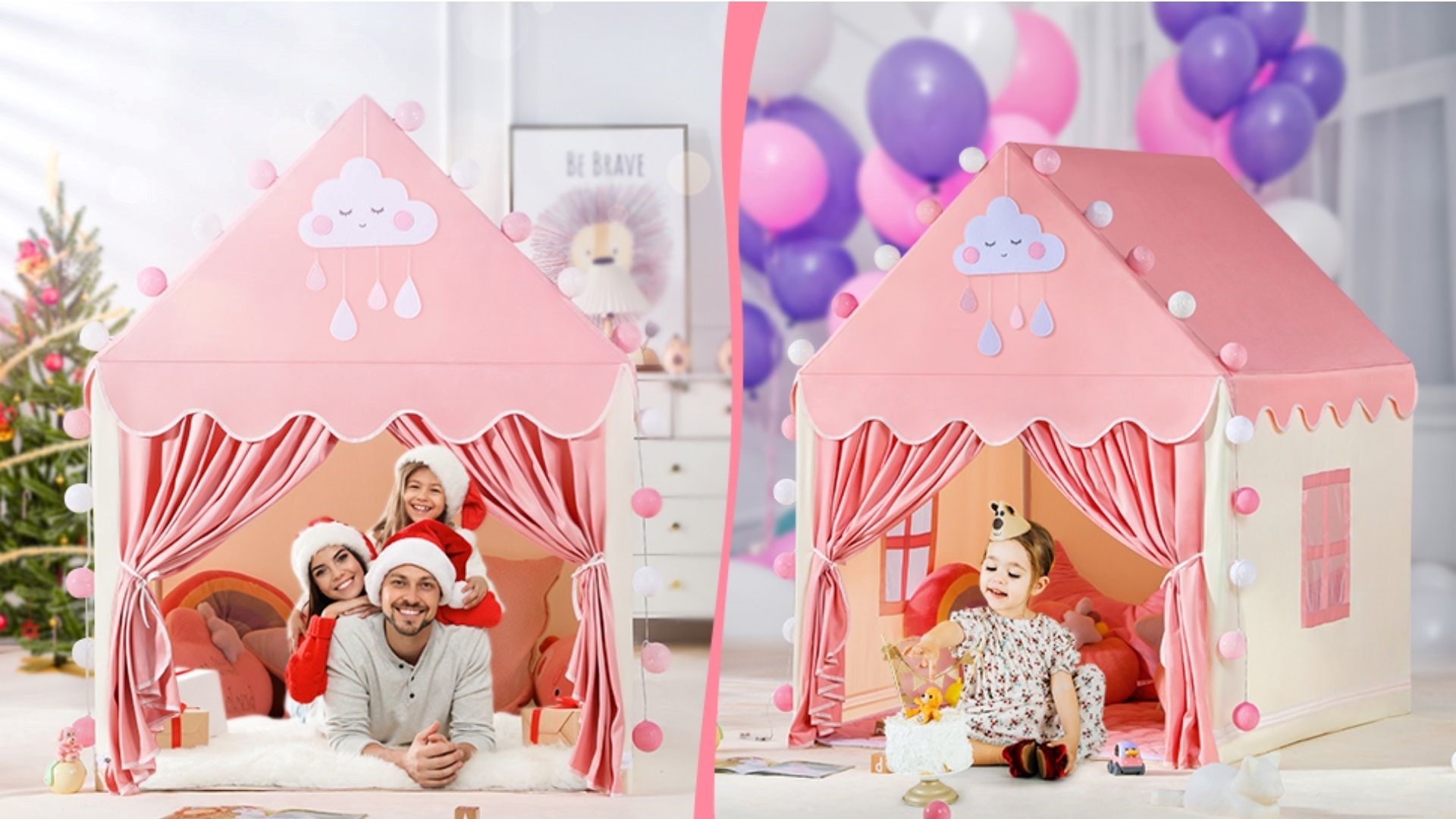
It was a rainy Tuesday afternoon, and I was bracing myself for the inevitable chaos. My two kids, stuck indoors with nothing to do, were already starting to bicker. Then I remembered the fabric tent tucked away in the closet — a simple pop-up playhouse I’d bought months ago and forgotten about.
I set it up in the living room, tossed in some pillows and books, and stepped back. What happened next surprised me. My kids disappeared inside and stayed there for nearly two hours. No screens. No fighting. Just pure, focused play. That little kids tent house became the best parenting tool I didn’t know I needed.
Creates a Personal Space They Can Call Their Own
Children crave spaces that belong to them — places where they make the rules and control what happens. A kids tent house provides exactly that.
Inside their tent, they’re the boss. They decide who enters, what games get played, and how their space is decorated. This sense of ownership builds:
Independence: Making decisions about their own space Confidence: Having control in a world where adults usually run things Responsibility: Keeping their special space organized (sometimes!)
I’ve watched my daughter transform her tent into a library one day, a spaceship the next, and a secret headquarters the day after. That flexibility to reimagine their space constantly keeps it fresh and engaging.
Encourages Imaginative and Creative Play
Unlike toys with fixed purposes, a tent house is wonderfully open-ended. It becomes whatever a child’s imagination needs it to be.
One day it’s:
- A castle under siege by dragons
- A camping adventure in the wilderness
- A cozy café serving imaginary cupcakes
- A doctor’s office treating stuffed animal patients
- A secret spy base planning missions
This kind of imaginative play is crucial for cognitive development. Children create narratives, solve problems within their stories, and develop creative thinking skills that transfer to academics and life.
The tent provides the stage; their imagination writes the script.
Provides a Calm-Down Space for Emotional Regulation
Here’s something I didn’t expect: the tent became my son’s go-to spot when he felt overwhelmed.
After a particularly frustrating homework session or a disagreement with his sister, he’d retreat to his tent with a stuffed animal and a book. Ten minutes later, he’d emerge calmer and ready to try again.
A kids tent house serves as:
- A safe retreat from overstimulation
- A quiet space to process big feelings
- A cozy environment that feels secure and contained
- A self-regulation tool kids can access independently
Child psychologists recognize the value of “calm corners” for emotional regulation. A tent naturally creates this designated space without feeling like punishment or timeout.
Supports Independent Play and Reduces Screen Time
Getting kids to play independently without defaulting to screens can feel impossible. A tent house makes it easier.
The enclosed, special nature of the space holds their attention longer than open-floor play. I’ve noticed my kids will spend 30-60 minutes in their tent doing activities they’d abandon after 10 minutes elsewhere.
Independent play in a tent teaches:
- Self-entertainment skills
- Sustained focus and attention
- Problem-solving without adult intervention
- Creativity and resourcefulness
And for parents? It means precious time to cook dinner, work, or just breathe without feeling guilty about screen time.
Encourages Reading and Quiet Activities
There’s something magical about reading in a cozy, enclosed space. The tent creates an instant “reading nook” that makes books feel special.
String some battery-powered fairy lights inside, add cushions and a small basket of books, and suddenly reading becomes an adventure rather than a chore.
Beyond reading, tents are perfect for:
- Puzzles and quiet games
- Drawing and coloring
- Listening to audiobooks or calm music
- Journaling or pretend writing
The tent signals “quiet time” in a way that feels fun rather than restrictive.
Facilitates Social Play and Relationship Building
When siblings or friends play together in a tent, they’re practicing crucial social skills in a contained, cooperative environment.
Social benefits include:
- Sharing the space and negotiating rules
- Collaborating on imaginative scenarios
- Practicing communication and compromise
- Building teamwork through joint activities
The physical boundaries of the tent actually help social play. There’s a clear definition of “in the game” (inside the tent) versus outside, which helps children understand participation and roles.
I’ve watched my kids’ relationship strengthen through tent play. They create inside jokes, collaborate on elaborate games, and genuinely enjoy each other’s company in a way that doesn’t always happen during regular play.
Provides Weather-Proof Play Space
Living in an area with unpredictable weather or extreme temperatures? A kids tent house ensures children can enjoy “outdoor-style” play year-round, safely indoors.
Weather benefits:
- Rainy days don’t mean bored kids
- Summer heat or winter cold won’t stop play
- Air-conditioned comfort during extreme weather
- No concerns about insects, sun exposure, or other outdoor risks
The tent brings the adventure indoors without the weather-related hassles.
Easy Setup, Portability, and Storage
Unlike permanent play structures, most tent houses are:
- Quick to set up: Pop-up designs assemble in minutes
- Portable: Move from room to room or take to grandparents’ house
- Compact storage: Fold flat when not in use
- Lightweight: Even kids can help set up and take down
This flexibility means the tent can appear when needed and disappear when you need floor space back. No permanent commitment, no construction required.
Affordable Investment with Long-Term Value
Compared to elaborate play equipment, a quality tent house is remarkably affordable while delivering years of use.
A good tent typically costs between Rs. 2,000-8,000 depending on size and features — less than many single-use toys that get abandoned within weeks. The tent grows with your child, adapting to their changing interests and play styles from toddlerhood through early elementary years.
If you’re looking for quality options, searching for a trusted toys shop near me can help you find stores offering various tent designs where you can assess size, material quality, and construction before purchasing.
Final Thoughts
A kids tent house is more than just another toy. It’s a personal retreat, an imagination launcher, an emotional regulation tool, and a social play space all rolled into one simple fabric structure.
From quiet reading time to elaborate imaginative adventures, from solo play to sibling bonding, from rainy day salvation to daily use — a tent house proves its value over and over.
The best part? Kids think it’s just fun. They don’t realize they’re developing independence, creativity, emotional regulation, and social skills. They just know they love their special space.
And honestly, that’s exactly how the best developmental tools should work.
